
Are Wood Pellets Sustainable? Environmental Benefits Explained

Are Wood Pellets Sustainable? Environmental Benefits Explained
Are Wood Pellets Sustainable

Introduction: Why Sustainability Matters

As energy costs rise and climate concerns grow, many people ask: are wood pellets sustainable? The answer is yes — when responsibly produced, wood pellets are one of the most sustainable heating fuels available today.

Wood pellets offer renewable, carbon-neutral energy made from waste materials that would otherwise go unused. They support the transition away from fossil fuels and help reduce environmental impact across the UK and beyond.

What Makes Wood Pellets Sustainable?

Wood pellets are made from sawdust, shavings, and offcuts from sustainably managed forests. These by-products are compressed into dense, energy-rich pellets using natural lignin as a binder.

No trees are felled solely for pellet production. Instead, pellets make full use of existing forestry and sawmill waste, maximising the value of every tree harvested.

At Balcas Energy, all pellets are ENplus® A1 certified, ensuring consistent quality, traceability, and sustainability at every stage of production.

The Carbon-Neutral Cycle

So, are wood pellets sustainable from a carbon perspective? Yes. When burned, pellets release carbon absorbed by trees during growth. New trees then reabsorb that carbon, creating a balanced, renewable cycle.

This makes wood pellets carbon neutral, unlike oil, coal, or gas, which release stored fossil carbon that contributes to global warming.

Reducing Waste and Supporting the Circular Economy

Pellet manufacturing is part of a circular economy, turning sawmill by-products into valuable energy. This reduces waste, minimises landfill, and helps the forestry industry operate more efficiently.

At Balcas Energy, even the pellet production process is powered by renewable electricity generated from onsite biomass CHP plants. This ensures a truly sustainable operation.

Local Production Means Lower Emissions

Importing fuel increases carbon output through transportation. Using locally produced pellets reduces emissions and supports regional economies.

Balcas Energy manufactures pellets in the UK and Ireland, minimising transport distances and ensuring reliable, home-grown supply.

The Environmental Benefits of Wood Pellets

  • Carbon Neutral – Closed carbon cycle through sustainable forestry.
  • Renewable – Derived from managed woodlands with continuous replanting.
  • Low Emissions – Significantly cleaner than fossil fuels.
  • Efficient – High heat output with minimal ash or waste.
  • Local and Sustainable – Produced regionally, reducing fuel miles.

Conclusion: A Renewable Choice for the Future

So, are wood pellets sustainable? Absolutely. When sourced from responsible producers like Balcas Energy, they represent one of the cleanest, most renewable energy options available.

Choosing certified wood pellets supports sustainable forestry, reduces carbon emissions, and contributes to a greener, low-carbon future. For efficient, environmentally responsible heating, wood pellets are the natural choice.

FAQs About the Sustainability of Wood Pellets

1. Are wood pellets really sustainable?

Yes. Wood pellets are made from renewable forestry by-products such as sawdust and shavings, ensuring no trees are felled solely for fuel production.

2. How are wood pellets carbon neutral?

When burned, pellets release the same carbon absorbed by trees during growth. Sustainable replanting ensures this carbon is continuously reabsorbed, maintaining balance.

3. Do wood pellets contribute to deforestation?

No. Responsible producers like Balcas Energy use waste wood from sawmills and sustainably managed forests, supporting reforestation and biodiversity.

4. What makes Balcas Energy wood pellets sustainable?

Balcas Energy uses renewable electricity from onsite biomass CHP plants, making its ENplus® A1 pellets both carbon neutral and locally produced.

5. How do wood pellets help the environment?

They reduce waste, cut carbon emissions, and provide a renewable alternative to fossil fuels, helping households and businesses lower their environmental footprint.

About Balcas Energy

Balcas Energy is one of the UK’s leading manufacturers and suppliers of ENplus® A1 wood pellets, providing sustainable heating solutions across the UK and Ireland.

📍 Enniskillen, Northern Ireland

☎ 028 6632 3003

🌐 https://balcasenergy.com

How to Spot High-Quality Wood Pellets Before You Buy

How to Spot High-Quality Wood Pellets Before You Buy

How to Spot High-Quality Wood Pellets Before You Buy

Choosing the right wood pellets makes a big difference to your heating system’s efficiency and lifespan. Poor quality pellets create excess ash, increase emissions, and damage your boiler. High-quality pellets give you reliable heat, cleaner combustion, and long-term savings. Here’s how to spot high quality wood pellets before you buy.

1. Check for ENplus® A1 Certification

Always look for ENplus® A1 certified wood pellets. This international standard guarantees pellets meet strict quality, moisture, and ash requirements. Certified pellets burn cleaner, last longer, and protect your boiler from unnecessary wear. If pellets don’t display certification, avoid them.

2. Look at the Pellet Colour

High-quality wood pellets are light in colour, showing they come from pure, debarked wood. Darker pellets often contain bark or contaminants. These burn less efficiently and create more ash. When buying bagged pellets, always check for a consistent, light appearance.

3. Test Pellet Durability

Good pellets should feel solid, not crumbly. Squeeze one gently—if it breaks apart easily, it’s low quality. High durability ensures pellets withstand transport and storage without turning to dust. More dust means more blockages and less efficient burning.

4. Check for Low Dust Content

Excess dust in the bag signals poor-quality pellets. Dust reduces airflow in your stove and increases maintenance. Shake the bag gently before buying. If you see a lot of fine powder, choose a different brand.

5. Confirm Low Moisture Content

Moisture content is critical for efficient burning. Premium pellets contain less than 10% moisture. Low moisture means higher energy output, cleaner combustion, and less waste. If suppliers provide technical specifications, always check moisture levels.

6. Compare Calorific Value

The calorific value shows how much energy pellets produce per kilogram. High-quality pellets exceed industry standards and provide greater heat output. Choosing high-calorific pellets means fewer refills, reduced fuel costs, and maximum efficiency for your boiler.

7. Trust a Reliable Supplier

The easiest way to ensure quality is to buy from a trusted supplier. Balcas Energy Wood Pellets are produced locally in Northern Ireland and Scotland using sustainable sawmill residues. Every batch carries ENplus® A1 certification, guaranteeing consistent, clean, and efficient heating fuel.

Final Thoughts

Knowing how to spot high-quality wood pellets saves you money, reduces maintenance, and protects your heating system. Look for ENplus® A1 certification, low moisture, and minimal dust every time.

👉 Ready to upgrade your heating? Choose Balcas Energy Wood Pellets for reliable, eco-friendly fuel that delivers lasting warmth.

FAQs About Spotting High-Quality Wood Pellets

1. What certifications should I look for when buying wood pellets?

Look for ENplus® A1 certification, which guarantees low ash, low moisture, and consistent, efficient performance.

2. How can I tell if wood pellets are good quality?

High-quality pellets are smooth, shiny, and uniform in size. They should not crumble easily or produce excessive dust.

3. Do low-quality pellets affect boiler performance?

Yes. Poor-quality pellets create more ash and dust, which can clog feeders, reduce efficiency, and increase maintenance costs.

4. Are hardwood or softwood pellets better?

Both work well. Softwood pellets often burn hotter, while hardwood pellets can burn longer. Certified pellets ensure consistent results.

5. Why choose Balcas Energy wood pellets?

Balcas Energy pellets exceed ENplus® A1 standards, are locally produced, and manufactured with renewable energy for premium, sustainable heating.

About Balcas Energy

Balcas Energy is one of the UK’s leading manufacturers and suppliers of ENplus® A1 wood pellets, providing sustainable heating solutions across the UK and Ireland.

📍 Enniskillen, Northern Ireland

☎ 028 6632 3003
🌐 https://balcasenergy.com


Wood Pellets for Heating – A Smarter Choice for Homes and Businesses

Wood Pellets for Heating – A Smarter Choice for Homes and Businesses

Wood pellets for heating

Introduction: Why Choose Wood Pellets?

Many households and businesses now use wood pellets for heating because they offer efficiency, sustainability, and reliable warmth. Compared to fossil fuels, pellets provide lower costs, cleaner combustion, and a renewable supply made from timber by-products.

What Are Wood Pellets for Heating?

Wood pellets are small, dense cylinders made from compressed sawdust and wood shavings. With low moisture content, they burn efficiently, producing consistent heat. Certified ENplus® A1 pellets, such as those from Balcas Energy, guarantee top performance and minimal ash.

The Benefits of Using Wood Pellets

  1. High Efficiency – Modern stoves and boilers achieve over 90% efficiency with pellets, meaning more energy becomes usable heat.
  2. Cost Savings – Pellet prices remain stable compared to oil or gas, reducing the risk of sudden heating bill increases.
  3. Sustainability – Pellets are carbon neutral, with emissions reabsorbed by newly planted trees in sustainable forests.
  4. Convenience – Available in bagged or bulk deliveries, pellets suit households, schools, hospitals, and commercial sites.

Comparing Pellets with Traditional Fuels

Unlike logs, pellets burn cleanly without unpredictable moisture levels. Compared to oil or LPG, they offer lower emissions and steadier pricing. Pellets also support local jobs and industries, making them a practical and community-friendly choice.

How Much Heating Do Pellets Provide?

One tonne of pellets produces around 4,800kWh of energy. Most UK homes need three to five tonnes per winter, depending on property size and insulation levels.

Storage Tips for Wood Pellets

To get the best from wood pellets for heating, store them in a dry, ventilated space. Bagged pellets should stay sealed and off the ground, while bulk deliveries require sealed hoppers or silos. Proper storage preserves fuel quality.

Conclusion: A Reliable Renewable Heating Option

Using wood pellets for heating delivers efficiency, sustainability, and long-term savings. With local supply and certified quality, Balcas Energy ensures dependable warmth for households and businesses across the UK and Ireland.

FAQs About Wood Pellets for Heating

1. What are wood pellets used for in heating?

Wood pellets are used in stoves, boilers, and biomass systems to provide efficient, sustainable, and carbon-neutral heat for homes and businesses.

2. How efficient are wood pellets compared to other fuels?

Wood pellets achieve over 90% efficiency in modern appliances, making them more effective than logs and often cheaper than oil or gas.

3. How much energy does one tonne of wood pellets provide?

One tonne of wood pellets provides around 4,800kWh of energy, enough to heat an average home for six to eight weeks.

4. Are wood pellets environmentally friendly?

Yes. Pellets are carbon neutral and made from sustainable timber by-products. Burning them helps reduce reliance on fossil fuels.

5. What is the best way to store wood pellets for heating?

Keep pellets in a dry, ventilated space. Store bagged pellets off the ground, or use sealed hoppers and silos for bulk.

About Balcas Energy

Balcas Energy is one of the UK’s leading manufacturers and suppliers of ENplus® A1 wood pellets, providing sustainable heating solutions across the UK and Ireland.

📍 Enniskillen, Northern Ireland

☎ 028 6632 3003
🌐 https://balcasenergy.com


How to Store Wood Burning Pellets

How to Store Wood Burning Pellets

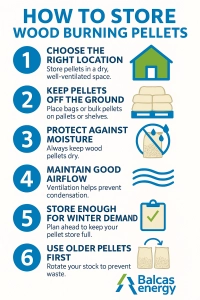
Store Wood Burning Pellets

Introduction: Protect Your Fuel Investment

Storing fuel properly makes a big difference. Learning how to store wood burning pellets ensures maximum efficiency, longer shelf life, and lower heating costs. Poor storage can ruin pellets, leading to clogs, wasted fuel, and reduced heat output. Read on to learn How to Store Wood Burning Pellets efficiently.

Step 1: Choose the Right Location

Always store pellets in a dry, well-ventilated space. A garage, shed, or utility room works well if free from dampness. Avoid storing pellets directly on concrete floors, which can transfer moisture.

Step 2: Keep Pellets Off the Ground

Place bagged pellets on pallets or shelving to prevent moisture rising from the floor. Bulk deliveries should go into sealed hoppers or silos with proper ventilation. Keeping fuel elevated protects pellet integrity.

Step 3: Protect Against Moisture

Moisture is the main enemy of pellets. Even small amounts can cause swelling or crumbling. Always keep bags sealed until use, and ensure bulk stores are watertight.

Step 4: Maintain Good Airflow

Ventilation prevents condensation and keeps pellets dry. Poor airflow can trap moisture, reducing fuel quality. A well-ventilated space helps maintain efficiency and prevents mould or clumping.

Step 5: Store Enough for Winter Demand

Plan ahead. An average home needs three to five tonnes of pellets each winter. Ordering early ensures you have enough supply and avoids peak-season shortages.

Step 6: Use Older Pellets First

When topping up, always use the oldest pellets first. Rotating stock prevents waste and ensures all fuel is used at its best.

Conclusion: Store Right, Burn Bright

Learning how to store wood burning pellets keeps your heating system efficient and reliable. Dry, elevated, and ventilated storage ensures pellets stay in perfect condition. With proper care, every delivery from Balcas Energy provides maximum value and consistent warmth throughout winter.

FAQs About Storing Wood Burning Pellets

1. Why is proper storage important for wood pellets?

Proper storage keeps pellets dry and intact. Moisture damages pellets, reduces efficiency, and can cause heating system blockages.

2. Can I store wood pellets outside?

Not recommended. Outdoor storage exposes pellets to rain and dampness. Always keep them in sealed, dry, and ventilated areas.

3. How long can wood pellets last in storage?

When stored correctly, wood pellets can last up to two years without losing efficiency or structural quality.

4. Should I keep pellets on the ground?

No. Always raise pellets on pallets or shelves to avoid ground moisture. Bulk pellets need sealed hoppers or silos.

5. Do bagged and bulk pellets need different storage methods?

Yes. Bagged pellets must stay sealed and elevated. Bulk pellets require a sealed, ventilated silo or hopper to stay dry.

About Balcas Energy

Balcas Energy is one of the UK’s leading manufacturers and suppliers of ENplus® A1 wood pellets, providing sustainable heating solutions across the UK and Ireland.

📍 Enniskillen, Northern Ireland

☎ 028 6632 3003
 

How to Calculate the Wood Pellets You Need for Winter Heating

How to Calculate the Wood Pellets You Need for Winter HeatingHow to Calculate the Wood Pellets You Need for Winter Heating

Introduction: Plan Ahead for a Warm Winter

Running out of fuel in mid-winter is stressful and costly. Knowing how to calculate the wood pellets you need for winter heating helps households and businesses plan deliveries, control costs, and guarantee reliable warmth.

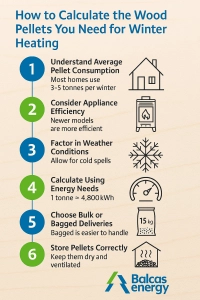
Step 1: Understand Average Pellet Consumption

Most UK homes use between three and five tonnes of wood pellets each winter. Usage depends on property size, insulation, and appliance efficiency. Smaller homes or well-insulated houses need less, while larger or older properties consume more.

Step 2: Consider Appliance Efficiency

Modern pellet boilers and stoves reach efficiency levels above 90%. Older or poorly maintained appliances waste more energy, increasing pellet consumption. Regular servicing ensures maximum performance and accurate fuel planning.

Step 3: Factor in Weather Conditions

Cold snaps and long winters increase fuel use significantly. Mild winters reduce demand. Always add a buffer tonne to cover unpredictable weather.

Step 4: Calculate Using Energy Needs

One tonne of wood pellets provides about 4,800kWh of energy. Compare this with your home’s annual heating demand in kilowatt-hours to estimate pellet requirements. Energy bills or smart meters can help with this calculation.

Step 5: Choose Bulk or Bagged Deliveries

Bagged pellets suit smaller users who prefer easy storage and handling. Bulk deliveries cost less per tonne and suit higher usage. Choose based on storage space, budget, and convenience.

Step 6: Store Pellets Correctly

Keep pellets in a dry, ventilated space to maintain quality. Bagged pellets should be raised off the ground, while bulk pellets need sealed hoppers or silos. Good storage prevents waste and preserves efficiency.

Conclusion: Secure Your Winter Supply Early

Learning how to calculate the wood pellets you need for winter heating helps avoid shortages, save money, and guarantee comfort. Ordering early from trusted suppliers like Balcas Energy ensures consistent, certified fuel for the entire heating season.

FAQs About Calculating Wood Pellet Needs for Winter

1. How many tonnes of wood pellets does an average home need for winter?

Most UK homes need between three and five tonnes of wood pellets per winter, depending on property size and insulation levels.

2. How can I calculate my pellet requirements accurately?

Check your home’s annual heating demand in kWh, then divide by 4,800kWh (the energy in one tonne of pellets).

3. Does boiler efficiency affect how many pellets I need?

Yes. Modern pellet boilers operate at over 90% efficiency, while older or poorly serviced systems consume more fuel to deliver the same heat.

4. Should I order extra pellets for winter?

Yes. Always add at least one extra tonne as a buffer to cover unexpected cold snaps or higher-than-average energy use.

5. Are bulk deliveries more cost-effective for winter heating?

Yes. Bulk pellet deliveries usually cost less per tonne than bagged pellets, making them ideal for higher winter demand.

About Balcas Energy

Balcas Energy is one of the UK’s leading manufacturers and suppliers of ENplus® A1 wood pellets, providing sustainable heating solutions across the UK and Ireland.

📍 Enniskillen, Northern Ireland

☎ 028 6632 3003

 

Wood Pellets for UK Winter 2025

Wood Pellets for UK Winter 2025 – Stay Warm and Prepared

Wood Pellets for UK winter 2025


Be Ready Before the Cold Hits

Demand for heating fuel always rises when temperatures drop. Choosing wood pellets for UK winter 2025 ensures reliable warmth, stable pricing, and peace of mind. By planning ahead, households and businesses avoid shortages and protect themselves from unexpected cost increases.

Why Wood Pellets Are the Smart Choice for 2025

Wood pellets provide consistent, carbon-neutral heat and outperform fossil fuels on both price and sustainability. Unlike oil or gas, which fluctuate with global markets, pellets are produced locally using sawmill by-products. This helps keep prices stable and supply chains reliable.

Anticipating Higher Demand in Winter 2025

UK winters are becoming less predictable, with sudden cold snaps increasing heating demand. In past years, this caused fuel shortages and delayed deliveries. Ordering wood pellets early in 2025 avoids seasonal stress, guaranteeing a steady supply when households and businesses need it most.

Bulk or Bagged Pellets – Which to Choose?

Bagged pellets are convenient for smaller users, easy to store and handle. Bulk deliveries suit larger households, farms, and commercial systems. Bulk pellets also cost less per tonne, making them the most economical choice for heavy winter use.

Storage Tips for Winter Efficiency

Keep pellets dry to protect fuel quality. Store bagged pellets on pallets, raised off the ground, and away from damp areas. For bulk deliveries, use a sealed hopper or silo with proper ventilation. Good storage preserves energy value and prevents waste.

Supporting Sustainability with Every Delivery

Balcas Energy produces ENplus® A1 certified wood pellets in the UK and Ireland. Every pellet is manufactured using renewable energy and sustainable forestry practices. Customers not only enjoy efficient heating but also reduce carbon emissions and support local green energy.

Conclusion: Order Early, Stay Warm

Securing wood pellets for UK winter 2025 is the smartest way to guarantee reliable heating, cost savings, and environmental benefits. Ordering early means households and businesses stay comfortable all season, without worrying about rising prices or empty fuel stores.

FAQs About Wood Pellets for UK Winter 2025

1. Why should I order wood pellets early for winter 2025?

Ordering early secures supply, avoids seasonal shortages, and often locks in better prices before demand peaks in colder months.

2. Are wood pellets cheaper than heating oil or gas in 2025?

Yes. Wood pellets are usually more stable in price than oil or gas because they are locally produced and less affected by global markets.

3. How many tonnes of wood pellets does an average UK home use in winter?

Most UK households use between three and five tonnes of pellets each winter, depending on home size, insulation, and heating habits.

4. What is the best way to store wood pellets through winter?

Store bagged pellets in a dry, ventilated space off the ground. Bulk pellets should be kept in sealed hoppers or silos.

5. Are Balcas Energy wood pellets sustainable?

Yes. Balcas Energy pellets are ENplus® A1 certified, produced using renewable energy, and manufactured from sustainable sawmill by-products.

About Balcas Energy

Balcas Energy is one of the UK’s leading manufacturers and suppliers of ENplus® A1 wood pellets, providing sustainable heating solutions across the UK and Ireland.

📍 Enniskillen, Northern Ireland

☎ 028 6632 3003

 

Are Wood Pellets Better Than Fuel Oil in 2025?

Are Wood Pellets Better Than Fuel Oil in 2025?

Are Wood Pellets Better Than Fuel Oil


Introduction: A Changing Energy Market

As heating costs rise and climate policies tighten, many households are asking: are wood pellets better than fuel oil in 2025? The short answer is yes—wood pellets are more affordable, sustainable, and reliable. Let’s explore why pellets are the smarter choice this year.

Cost Comparison in 2025

Fuel oil prices remain volatile, rising and falling with global markets. Households often face unpredictable bills during colder months.

Wood pellets, produced locally from sawmill by-products, offer far more price stability. Bulk deliveries keep costs lower, and pellet prices are less vulnerable to international crises. Over a winter season, most households save money with wood pellets compared to oil.

Efficiency and Performance

Modern pellet boilers and stoves achieve efficiency levels above 90%. Fuel oil boilers are often less efficient, especially in older homes.

Pellets burn cleanly with consistent heat output, making them suitable for both small and large heating systems. With proper maintenance, pellet appliances provide reliable warmth while consuming less energy overall.

Environmental Impact

Fuel oil is a fossil fuel that releases stored carbon into the atmosphere, driving climate change. In 2025, this impact is even harder to justify.

Wood pellets are carbon neutral. The carbon released during combustion is reabsorbed by newly planted trees, creating a balanced cycle. Using pellets also supports responsible forestry and reduces dependence on imported oil.

Security of Supply

Oil imports are often disrupted by global politics, conflicts, or supply chain issues. Pellet supply is more local and sustainable.

Balcas Energy produces pellets in the UK and Ireland, powered by renewable energy. This ensures a consistent, home-grown fuel source.

The Verdict: Pellets Win in 2025

So, are wood pellets better than fuel oil in 2025? Absolutely. They’re cheaper, cleaner, and more sustainable.

Switching to pellets cuts heating bills, lowers emissions, and supports local renewable energy. In a time of rising costs and climate urgency, pellets are the clear choice.

FAQs About Wood Pellets vs Fuel Oil

1. Are wood pellets cheaper than fuel oil in 2025?

Yes. Wood pellets are generally cheaper than fuel oil in 2025 because they are locally produced and less affected by global markets.

2. Which is more efficient: wood pellet boilers or oil boilers?

Modern pellet boilers achieve efficiency rates above 90%, while older oil boilers often waste more energy and increase running costs.

3. Are wood pellets really carbon neutral?

Yes. Pellets release the same carbon absorbed by trees during growth. Responsible forestry ensures new trees continue the carbon cycle.

4. Can I switch easily from oil to pellets?

Yes. Many households replace oil boilers with pellet boilers or stoves. Bulk delivery and bagged pellets make the switch straightforward.

About Balcas Energy

Balcas Energy is one of the UK’s leading manufacturers and suppliers of ENplus® A1 wood pellets, providing sustainable heating solutions across the UK and Ireland.

📍 Enniskillen, Northern Ireland

☎ 028 6632 3003
Winter 2025 is Coming – Secure Your Wood Pellet Supply Now

Don’t Leave It Too Late to Order Wood Pellets for Winter 2025

Winter 2025 is Coming – Secure Your Wood Pellet Supply Now

Heating demand always rises sharply when temperatures fall. Winter 2025 is coming – secure your wood pellet supply now to avoid shortages. Planning ahead ensures consistent warmth, stable prices, and peace of mind.

Why Demand Increases in Winter

Each year, wood pellet demand peaks during the colder months. Families heat homes longer, and businesses run systems at full capacity. Higher demand can strain supply chains and affect delivery times. By ordering now, customers avoid the seasonal rush.

Protect Yourself from Price Fluctuations

Pellet prices can increase during winter due to higher demand and rising transport costs. Early orders often secure better rates. Buying in bulk before the season helps lock in value and reduce heating bills.

Reliable Supply Starts with Trusted Providers

Not all suppliers guarantee consistent quality or timely delivery. Balcas Energy produces pellets locally, using sustainable sawmill by-products and renewable energy. This means customers get a dependable, carbon-neutral fuel made to ENplus® A1 standards.

Storage Tips for Winter Readiness

Keeping pellets dry is essential. Store bagged pellets in a garage, shed, or utility room, raised off the floor. Bulk pellets should be stored in a sealed hopper or silo with proper ventilation. Good storage maintains efficiency and avoids fuel waste.

The Benefits of Securing Pellets Early

  • Avoid last-minute shortages during cold snaps.
  • Protect against winter price increases.
  • Enjoy reliable deliveries before demand spikes.
  • Guarantee a warm, stress-free season.

Conclusion: Order Now for Peace of Mind

Winter 2025 is coming – secure your wood pellet supply now. Planning ahead guarantees efficient heating, stable pricing, and reliable comfort. Don’t wait for the cold to catch you unprepared. Order today and enjoy a warmer, greener winter with Balcas Energy.

FAQs About Securing Your Winter Wood Pellet Supply

1. Why should I order wood pellets before winter 2025?

Ordering early protects you from seasonal shortages, ensures reliable delivery, and helps secure better pricing before demand increases.

2. How should I store wood pellets for winter?

Store bagged pellets in a dry, ventilated space, raised off the floor. Bulk pellets should be kept in a sealed hopper or silo.

3. Will pellet prices increase during winter 2025?

Pellet prices often rise in colder months due to higher demand and transport costs. Ordering early helps lock in stable rates.

4. How much fuel should I order for winter?

The average household uses three to five tonnes of pellets each heating season. Usage depends on insulation, appliance efficiency, and weather.

About Balcas Energy

Balcas Energy is one of the UK’s leading manufacturers and suppliers of ENplus® A1 wood pellets, providing sustainable heating solutions across the UK and Ireland.

📍 Enniskillen, Northern Ireland

☎ 028 6632 3003
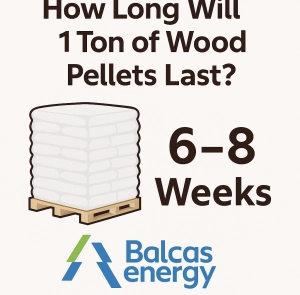
How Long Will 1 Ton of Wood Pellets Last for Autumn 2025?

Why Pellet Planning Matters for Autumn 2025

How long will 1 ton of wood pellets last

Many homeowners ask: how long will 1 ton of wood pellets last? The answer depends on usage, appliance efficiency, and heating demand. Knowing average burn times helps plan deliveries, avoid shortages, and manage heating costs effectively throughout the year.

Understanding Energy in 1 Ton of Pellets

One ton of quality pellets contains about 4,800kWh of energy. Efficiency depends on the appliance and chosen heat settings. Higher output settings consume fuel quickly, while lower settings extend usage.

Average Household Usage

For an average home, 1 ton of pellets lasts six to eight weeks during the colder months of autumn and winter 2025. In milder conditions, one ton may last longer, stretching to ten or even twelve weeks depending on demand.

Factors That Influence Longevity

Several factors determine how long 1 ton of wood pellets will last. Appliance efficiency is crucial—modern pellet stoves burn fuel more effectively. Home insulation, thermostat settings, and outside temperatures also play important roles in fuel consumption. Even pellet quality matters; low-moisture pellets provide greater energy output.

Storage and Convenience Benefits

Buying 1 ton of pellets often means purchasing a full pallet of bagged fuel. This ensures consistent supply during winter peaks. Proper storage in a dry, ventilated area keeps pellets in top condition, preserving their efficiency over time.

Maximising Pellet Efficiency

To make 1 ton last longer, maintain the stove or boiler regularly. Avoid running at maximum output constantly and use thermostatic control. Always choose ENplus® A1 certified pellets to achieve the highest energy yield and cleanest burn.

Conclusion: Plan Ahead for Winter 2025 Warmth

So, how long will 1 ton of wood pellets last? On average, expect six to eight weeks in winter. With efficient appliances, good insulation, and high-quality pellets, that same ton can last even longer. Careful planning ensures reliable warmth and lower heating costs all season.

FAQs About 1 Ton of Wood Pellets

1. How many bags are in 1 ton of wood pellets?

One ton usually equals 66 bags of 15kg pellets or 100 bags of 10kg pellets, depending on packaging size.

2. How much heating will 1 ton of pellets provide?

One ton of pellets contains around 4,800kWh of energy, enough to heat an average home for six to eight weeks.

3. Can 1 ton of wood pellets last all winter?

For most homes, no. The average household uses three to five tons each winter, depending on insulation and heating habits.

4. What affects how long 1 ton of pellets lasts?

Key factors include stove efficiency, outside temperatures, thermostat settings, and pellet quality. Well-insulated homes need fewer pellets.

About Balcas Energy

Balcas Energy is one of the UK’s leading manufacturers and suppliers of ENplus® A1 wood pellets, providing sustainable heating solutions across the UK and Ireland.

📍 Enniskillen, Northern Ireland

☎ 028 6632 3003
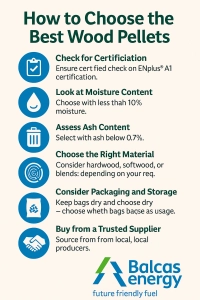
How to Choose the Best Wood Pellets for Winter 2025

How to choose the best wood pellets
How to Choose the Best Wood Pellets

Wood pellets are a popular renewable heating fuel, but not all pellets are the same. Poor-quality pellets can reduce efficiency, create excess ash, and damage appliances. Choosing the right ones ensures cleaner burning, better heat output, and long-term savings. Here’s a simple step-by-step guide to help you choose the best wood pellets for winter 2025.

Step 1: Check for Certification

Always start by looking for ENplus® A1 certification. This guarantees low ash, low moisture, and consistently high energy output. Certified pellets meet strict quality standards, so you know they will perform well in your appliance.

Step 2: Look at Moisture Content

Moisture is critical. Pellets with less than 10% moisture burn hotter and more efficiently. High moisture means wasted energy because heat is lost evaporating water instead of warming your home.

Step 3: Assess Ash Content

Good-quality pellets produce very little ash. Look for pellets with ash content below 0.7%. Too much ash clogs your stove or boiler, leading to frequent cleaning and reduced performance.

Step 4: Choose the Right Material

Wood pellets are made from hardwood, softwood, or blends. Softwood pellets often burn hotter, while hardwood pellets burn longer. Blended pellets balance both benefits. Choose based on your heating needs and appliance recommendations.

Step 5: Consider Packaging and Storage

Bagged pellets are convenient for smaller households and occasional use. Bulk deliveries are cheaper per tonne for larger users. Always ensure bags or storage areas are dry, sealed, and protected from moisture.

Step 6: Buy from a Trusted Supplier

A reliable supplier matters as much as the product itself. Choose local producers like Balcas Energy, who use sustainable forestry and produce pellets to ENplus® A1 standards. Trusted suppliers provide consistent quality, reliable delivery, and technical support.

FAQs About Choosing Wood Pellets

1. Are all wood pellets the same?

No. Pellets vary in moisture, ash, density, and quality. Always choose certified ENplus® A1 pellets for the best performance.

2. Can I use cheap pellets in my boiler?

Cheap, uncertified pellets often create more ash and dust, which can damage your appliance and reduce efficiency. They cost more long term.

3. How do I store wood pellets properly?

Keep pellets in a dry, ventilated area. Store bagged pellets on pallets, and use sealed hoppers or silos for bulk storage.

About Balcas Energy

Balcas Energy is one of the UK’s leading manufacturers and suppliers of ENplus® A1 wood pellets, providing sustainable heating solutions across the UK and Ireland.

📍 Enniskillen, Northern Ireland

☎ 028 6632 3003